
written by Lizzae Matteo
Subscription fatigue has become a defining feature of modern work. For business owners, leaders, and professionals, the rise of recurring software, media, data, and service subscriptions has fundamentally changed how we operate, and how we think.
From SaaS platforms and marketing tools to streaming services and cloud storage, nearly every function now runs on a monthly or annual billing cycle. While subscriptions offer flexibility and scalability, they also introduce complexity. The result? Mental clutter, financial leakage, and operational friction that quietly erodes focus.
A Quick Brief for Busy Leaders
- The average professional manages dozens of recurring tools across work and personal life.
- Subscriptions fragment workflows and create hidden cognitive load.
- Poor visibility into renewals and usage leads to wasted spend.
- Centralizing and tracking subscriptions restores clarity and control.
- Small structural fixes can significantly reduce decision fatigue.
The Quiet Accumulation of Cognitive Debt
At first, subscriptions feel efficient. You sign up for a CRM, an analytics dashboard, a design platform. Each tool solves a problem. But over time, something shifts.
- Logins multiply.
- Renewal emails pile up.
- Team members adopt overlapping tools.
- Invoices arrive from platforms no one remembers approving.
The issue isn’t just financial. It’s cognitive. Every subscription represents:
- A decision to maintain
- A payment to justify
- A workflow to integrate
- A renewal to remember
Individually manageable. Collectively exhausting.
How Subscription Sprawl Impacts Organizations
For businesses, subscription fatigue scales quickly. What begins as a few essential tools often turns into an ecosystem of loosely connected platforms.
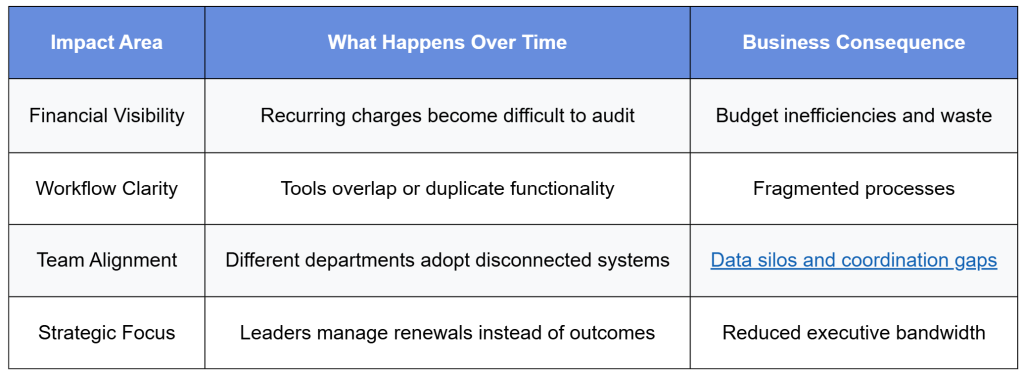
Recurring payments blur into the background. And what fades into the background rarely gets optimized.
The Administrative Layer Nobody Planned For
Subscription fatigue also extends beyond payments. Each platform generates documentation – invoices, confirmations, usage reports, tax records. When these files are large or scattered across inboxes and shared drives, they add to the chaos. Over time, document clutter becomes its own management burden.
One simple tactic is reducing file size and consolidating storage. For example, using a tool to shrink large pdf files can make invoices and reports easier to store, share, and retrieve when needed. It’s a small operational improvement, but small improvements compound — especially when applied across dozens of recurring services. Less digital clutter means fewer friction points when you need clarity fast.
A Practical Reset: Centralize and Track Everything
One of the most effective ways to reduce subscription fatigue is straightforward: put every subscription in one place. When individuals and businesses centralize recurring expenses, several things happen:
- You see the full picture.
- Redundant tools become obvious.
- Renewal dates stop being surprises.
- Budget conversations become data-driven.
Tools like TrackMySubs are designed for exactly this purpose. By allowing users to track subscriptions, set renewal alerts, and visualize spending patterns, platforms like this reduce guesswork and restore oversight. When everything is visible in one dashboard, including reminders for upcoming renewals , it becomes far easier to avoid unnecessary charges and make deliberate decisions.
Improving visibility into recurring payments may sound simple. It is. And that simplicity is precisely why it’s powerful.
How to Regain Control Over Recurring Tools
Here’s a practical checklist leaders can implement this quarter:
Subscription Simplification Checklist
- Inventory Everything
- Audit business and personal subscriptions.
- Include annual renewals and “forgotten” trials.
- Assign Ownership
- Every subscription should have a responsible owner.
- No owner = candidate for cancellation.
- Clarify Purpose
- What specific outcome does this tool support?
- If the answer is vague, reconsider it.
- Consolidate Where Possible
- Replace overlapping platforms.
- Negotiate bundled pricing when appropriate.
- Implement Tracking
- Use a centralized tool.
- Set renewal alerts at least 30 days in advance.
- Review Quarterly
- Treat subscriptions like investments.
- Evaluate ROI, not just cost.
This is less about cutting expenses and more about restoring intentionality.
Frequently Asked Questions
Why has subscription fatigue become more common in recent years? The shift to SaaS and subscription-based business models has made recurring payments the default across industries. As digital tools expand, so does the number of micro-decisions professionals must manage.
Is subscription fatigue mostly a financial issue? Not entirely. While cost matters, the larger issue is cognitive overload — managing renewals, tools, documentation, and workflows across fragmented systems.
How can small businesses prevent subscription sprawl? Start with centralized tracking, clear ownership, and quarterly reviews. Early structure prevents later chaos.
Are tracking tools worth the effort? Yes. Even modest visibility into recurring payments often reveals unnecessary spending and overlapping tools. The time saved in reduced mental clutter alone justifies the setup.
The Strategic Advantage of Less
Subscription models are not the enemy. They enable agility, experimentation, and scalability. But unmanaged subscriptions create drag.
When leaders simplify workflows, centralize recurring expenses, and reduce administrative friction, they reclaim something more valuable than budget savings: focus. And in modern business, focus compounds faster than any tool ever could.
Pingback: How Agencies Can Reduce Hidden Costs Across Their Entire Tech Stack - TrackMySubs